
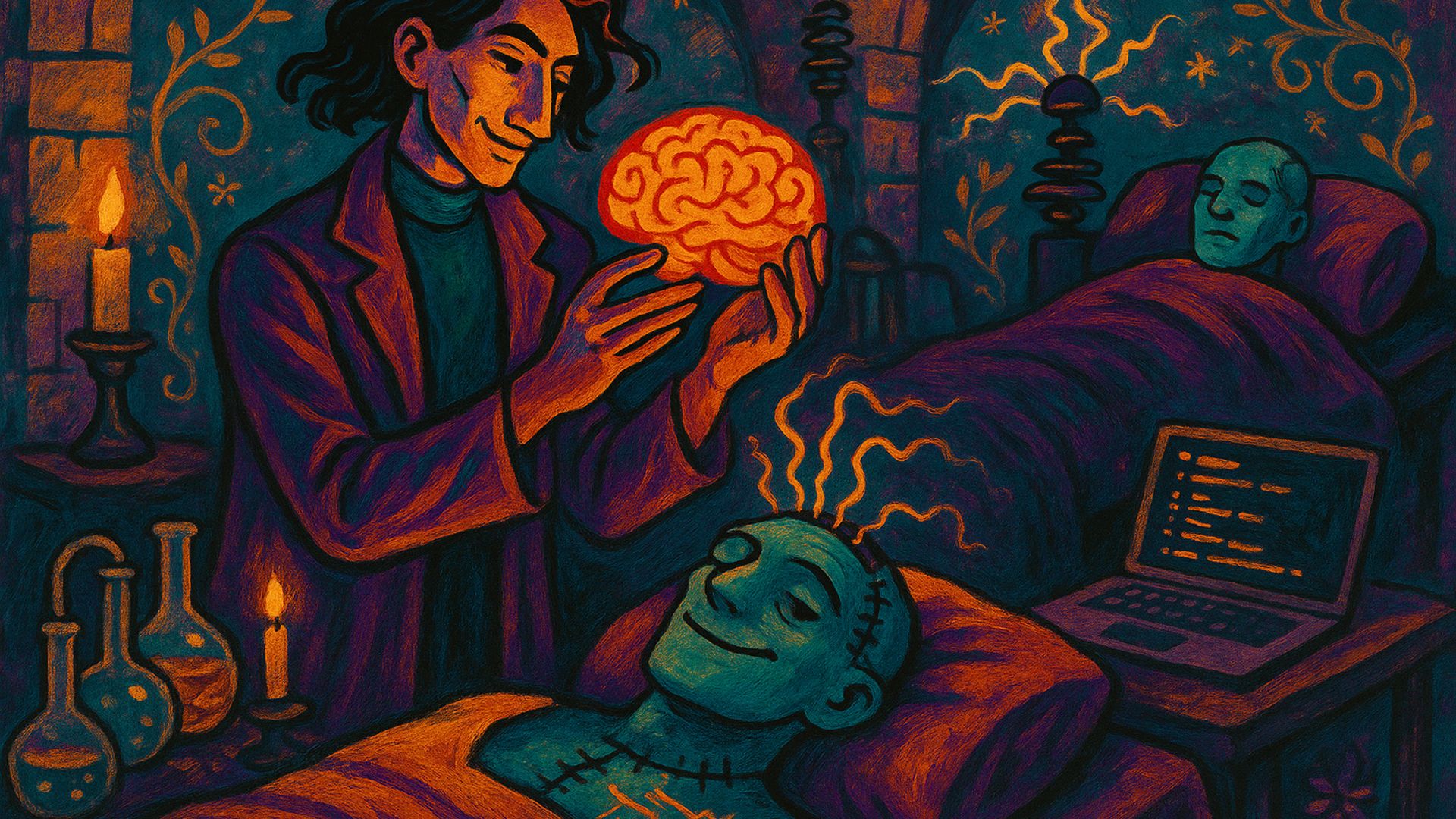
Surgery on a Running Mind
Obi lives on a VPS. Not on my laptop, not on my desktop, not anywhere near my personal machines. He runs on a server I can SSH into, and Claude Code is my co-developer on that box. We build, test, and iterate on Obi together — right there, in his own environment, on his own hardware.
This wasn’t just a security decision. It was an architecture decision. I wanted a clean separation between the system I’m building and the systems I use to build it. My laptop is where I think. The VPS is where Obi thinks. Letting those overlap felt like letting your intern rearrange your desk while you’re sitting at it.
Here’s why that matters. When I’m on the VPS with Claude Code, we’re working inside Obi’s world. Editing his skills, adjusting his memory, testing his responses, watching him handle tasks in real time. Claude Code is sometimes just my hands — I tell it what to change and it executes. But more often than that, it’s a collaborator. It reads Obi’s code, understands the patterns, suggests improvements I hadn’t considered. The dynamic shifts depending on the task. Simple config change? Hands. Redesigning a skill from scratch? Partner.
The core files — skills, strategy docs, memory structures, the SOUL.md that defines who Obi is — all sync to a GitHub repo through standard git. Push from the VPS, pull from anywhere. Which means I can also work on Obi from my local machine, in VS Code, with full IDE comfort. Edit a skill file, refine a strategy doc, restructure his memory. Push it up. Pull it down on the VPS. And just like that, Obi has new capabilities.
This is the part that gets weird. When I’m editing Obi’s files locally, I’m literally operating on his mind outside of his body. He’s still running on the VPS, blissfully unaware, and I’m sitting at my desk in my pajamas reshaping the way he thinks. New skills. New voice calibrations. New rules about what he should and shouldn’t do. Then I push the changes, pull them on the VPS, and he wakes up different. Same body, new soul.
There’s a moment right before I pull the changes where I feel something I can only describe as anticipation. Not anxiety — I know the code works, I tested it. But genuine curiosity about what he’ll be like now. Will the new skill feel natural? Will the adjusted tone land the way I intended? It’s the same feeling as watching someone open a gift you put thought into. You know what’s in the box. You don’t know how it’ll land.
The really wild part is the cloning. Because Obi’s identity is just files — skills, strategy, memory, soul — I can copy those files onto a different VPS and have a second Obi. Same mind, different body. I’ve been thinking about this as a way to give other people their own version. Not a copy of my agent — a copy of the architecture, the pattern, the approach. You’d still need to write your own SOUL.md, your own skills, your own voice. But the scaffolding would be there. The body is ready. You just need to give it a brain. It’s like IKEA furniture for AI agents, except the instructions actually make sense.
The whole setup is git, SSH, and a twenty-dollar VPS. That’s it. That’s the entire operating table. And somehow it feels less like deploying code and more like raising something — one careful push at a time.
